
International Observatory
on Brazil’s 2026 Elections
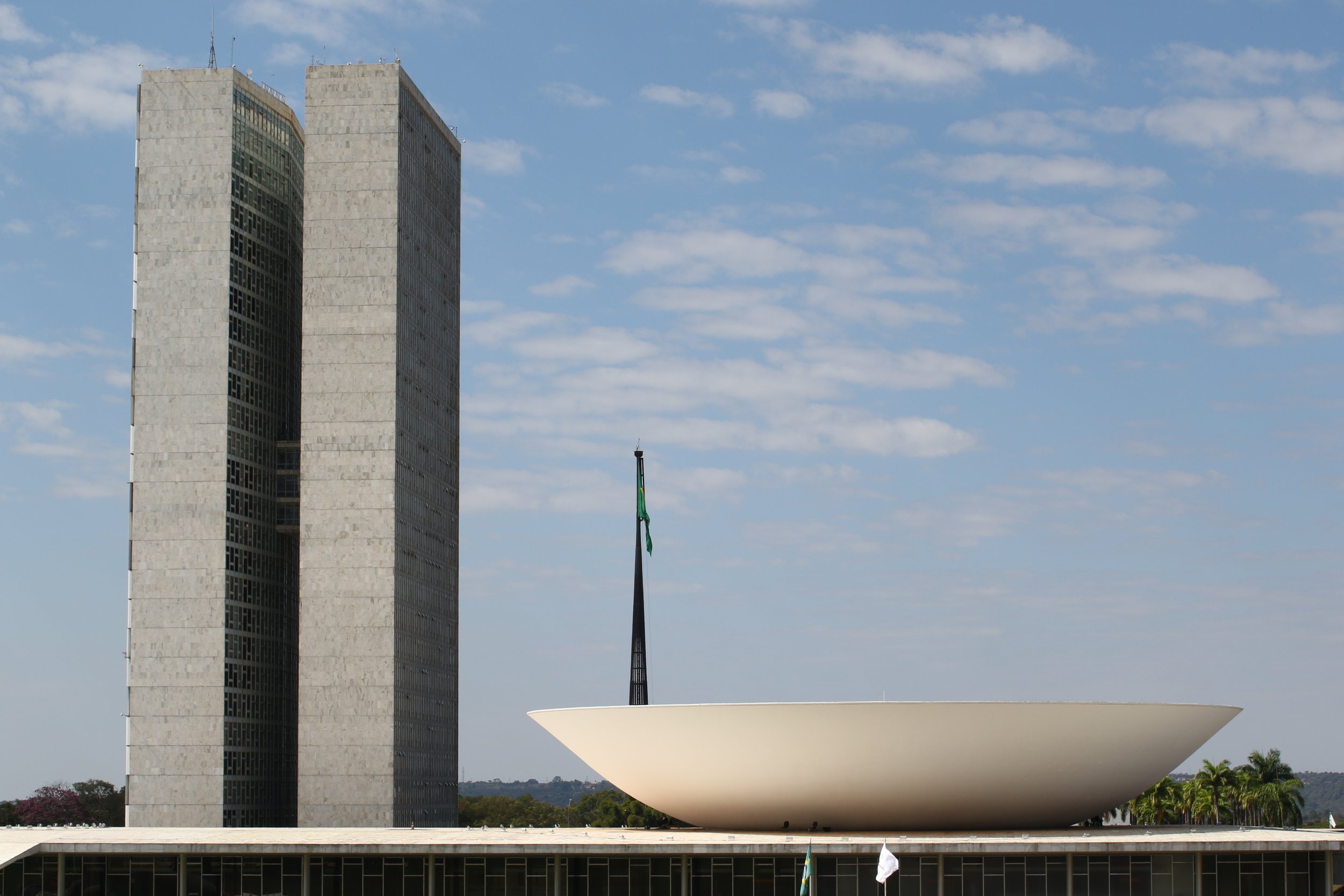

AboutThe International Observatory on Brazil’s 2026 Elections seeks to monitor the process of strengthening democratic institutions, public liberties, respect for the separation of powers and the independence of the judiciary in Brazil.
The Observatory supports evidence-based public policies, foreign policy, State reforms and spaces for social participation that strengthen the Rule of Law and respect for the Constitution in Brazil.
2026 ELECTIONS
The International Observatory on Brazil’s 2026 Elections monitors the presidential elections through collaborations with similar initiatives maintained in various independent academic and social institutes in Brazil.
Weekly newsletters and biweekly podcasts were published with analyzes aimed at international audiences, and monthly programmatic debates were also held with experts from Brazil and the United States on parallel topics of common interest to both countries.
In 2026, the Brazil Office Alliance joined forces with The Brazilian Report to produce exclusive content – in English and Portuguese – about the Brazilian electoral system, political parties, candidates, and key polls. The joint project also includes the production of a weekly newsletter and a monthly podcast.
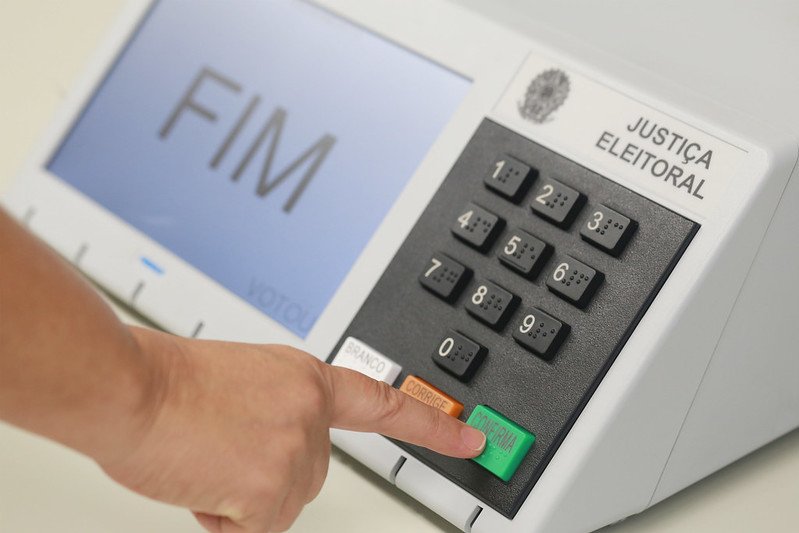
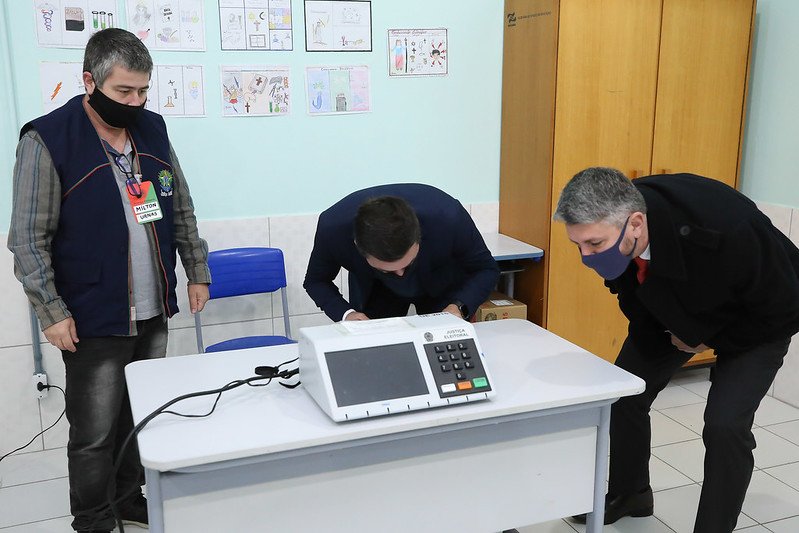
How elections work in BrazilBrazil holds general elections every four years, always in October. All voting is done electronically, by way of a system of standalone machines that have been in use since 1996 and reached full national coverage by 2000.
The machines are not connected to the internet and use multiple layers of encryption and digital signatures to prevent tampering. No cases of voter fraud have ever been documented in the system.
In 2026, Brazilians will elect:
1
President
27
State governors
513
Lower-house members
54
of the 81 Senate's 81 seats
Presidential and gubernatorial electionsThe president and governors are elected by a simple majority, but with a catch. If no candidate wins more than 50% of valid votes in the first round (always held on the first Sunday of October), the top two face each other in a runoff (on the last Sunday of October). As blank and spoiled ballots are excluded from the count of “valid” votes, a candidate can win without a majority of the total electorate. Every valid vote carries equal weight, as Brazil has no electoral college system.
The 513 seats in the House are distributed among Brazil's 27 states, with the bench size of each reflecting its population. No state gets fewer than eight seats, but as an example, São Paulo, the country’s most populous, holds 70 seats.
The number of votes received for each state is divided by the number of seats up for grabs, resulting in what is called the “electoral quotient.” Each party (or alliance of parties) that receives a total number of votes greater than or equal to the quotient has the right to representation in the lower house.
For instance, if 30 million people in São Paulo cast votes for lower house candidates, that state’s electoral quotient would be roughly 430,000. If Party X received a total of 3 million votes in São Paulo, it would have the right to six of the state’s House seats. Brazil uses an open-list system to decide who fills those seats, in which the candidates with the most votes from each party (or federation) are elected.
The system is designed to reflect ideological diversity, though its complexity — and the phenomenon of high-profile candidates pulling lesser-known running mates into office — has made it one of the more debated features of Brazilian democracy.
House elections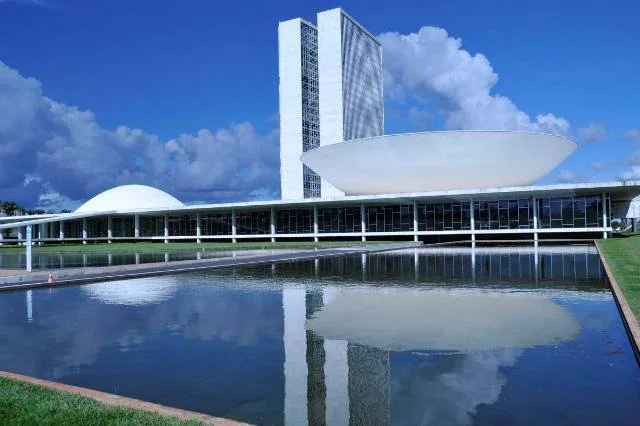
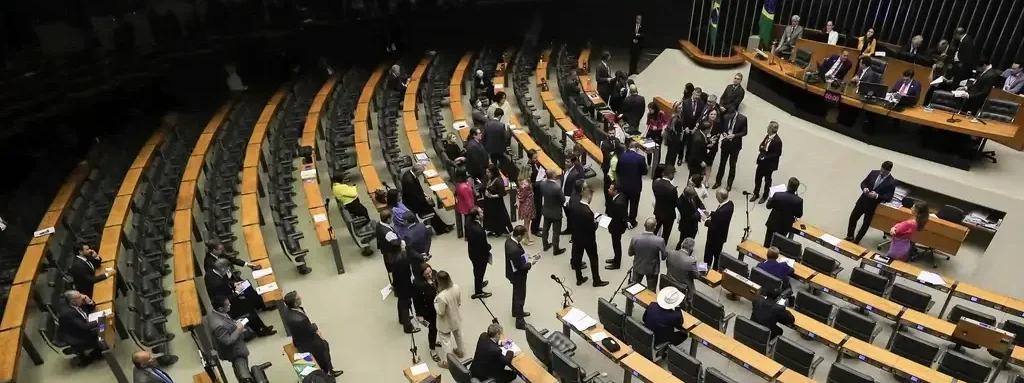
Senate electionsBrazil's 81 senators serve eight-year terms, with seats renewed in staggered cycles. In some elections, one-third of the Senate is up for grabs; in others, two-thirds. In 2026, 54 seats will be contested.
Unlike the lower house, Senate races use a first-past-the-post system: the candidate with the most votes in each state wins, regardless of margin.
Political parties
With 30 political parties registered in Brazil and 18 represented in Congress, making sense of the country's political landscape can quickly feel like sifting through a bowl of alphabet soup. What’s more, party names often do not denote what parties actually stand for, creating further confusion.
A recent statistical study called "Partisan GPS" tries to bring some order to the jumble.
It ranks 28 parties registered with Brazil's Superior Electoral Court (TSE) on a left-right spectrum, using four variables: candidate migration between the 2020 and 2024 municipal elections, participation in congressional caucuses, voting records in the lower house, and coalition arrangements formed ahead of the 2024 electoral cycle.
The findings reveal clear poles and a crowded center. Novo sits the furthest to the right; the PSTU (Unified Socialist Workers' Party) anchors the far left; and the Brazilian Democratic Movement (MDB) party lands at the ideological midpoint, reflecting its long reputation for flexibility over fixed doctrine. Two parties fall outside the ranking — the far-left PCO and the newly created Missão — due to insufficient data or no electoral history yet.
Workers’ Party
The PT was founded in 1980, during Brazil's transition away from military rule, by union leaders, intellectuals, artists and social movements. Its founding ideology centered on democratic socialism and opposition to inequality and corruption. In 1989, the party's standard-bearer, Luiz Inácio Lula da Silva, reached the runoff in Brazil's first post-dictatorship presidential election.
The PT governed Brazil from 2003 to 2016. Lula left office in 2010 with high approval ratings, his tenure marked by the creation of broad and popular social programs such as Bolsa Família. His chosen successor, Dilma Rousseff, became Brazil's first woman president — before being impeached in 2016 amid a fiscal and political crisis.
Ideologically, the PT has drifted toward pragmatism over the decades, forging alliances with centrist and business-friendly sectors. It remains closely tied to labor unions and social movements, and Lula remains one of Brazil's most influential political figures — a dominance that has arguably limited the emergence of new national leaders within the party.
Liberal Party
The PL was founded in 1985, during Brazil's return to democracy, initially positioning itself as a reform-minded alternative to the political extremes. It merged with PRONA in 2006 to become the Party of the Republic (PR), before reverting to its original name in 2019.
The party's dominant figure is Valdemar Costa Neto, a former congressman from the outskirts of São Paulo who has been convicted of corruption. He remains the party's chairman and chief political operator. The PL's national profile changed dramatically in 2021, when Jair Bolsonaro joined to dispute the 2022 presidential race — after failing to launch his own party. He brought a wave of allies with him, including his sons Flávio and Eduardo Bolsonaro.
The PL has evolved from an ideologically fluid party into a far-right force. When Lula won the 2022 election by a narrow margin, the PL filed legal challenges questioning the integrity of Brazil's electronic voting system — amplifying Bolsonaro's conspiracy theories.
Progressives
The PP traces its roots to Arena, the party that backed the military dictatorship. Over the decades, it has changed names multiple times and merged with other parties before settling on "Progressives" in 2018.
Despite the name, the party is conservative, close to the far right, and is a pillar of the so-called Big Center — a large congressional bloc that tends to back whoever holds federal power in exchange for the right incentives. As with most Big Center parties, the PP is not ideologically coherent: it was a key Bolsonaro ally, yet was part of Lula's coalition before announcing a split in 2025.
Internal cohesion has always been limited by the party's heterogeneous makeup — the product of successive mergers. It compensates with reach: the PP has one of the largest municipal networks in the country, with substantial lower-house bench and an enviable campaign kitty, making it a sought-after partner every electoral cycle.
Social Democratic
Party
The PSD was founded in 2011 by Gilberto Kassab, then mayor of São Paulo, Brazil’s wealthiest and most populous city. Kassab famously described the PSD as "neither right, nor left, nor center." In practice, the party almost always aligns with whoever holds federal power, trading congressional support for cabinet posts.
The PSD's regional branches operate with considerable independence, held together less by ideology than by their proximity to power. Its modus operandi, rooted in strategic ambiguity, transformed the PSD into an electoral juggernaut.
The PSD has more mayors (885 of Brazil’s 5,570) and state governors (6 of 27) than any other political party in Brazil. It also commands the second-largest bench in the Senate (14 of 81 seats), and a sturdy fifth place in the lower house (47 of 513). That prowess has elevated Kassab’s status from local politician to an éminence grise of national politics, thriving by never giving too much away.
União Brasil
União Brasil came to existence in 2022, the result of merging two parties: the Social Liberal Party (PSL) and Democratas (DEM). The PSL had been a minor party until Jair Bolsonaro's election in 2018 catapulted it to national prominence. DEM, meanwhile, traced its roots to 1985, when it was founded by supporters of the departing military regime.
The merger created the largest party in the lower house at the time, but União Brasil lost rank-and-file members when several politicians moved to the PL to follow Jair Bolsonaro and benefit from the bandwagon effect generated by his re-election campaign.
While both its founding parties were firmly right-wing, União Brasil is far from being ideologically consistent. It is part of Lula's left-leaning governing coalition and holds cabinet posts, though a portion of its congressional bloc still votes with the opposition.
The candidates
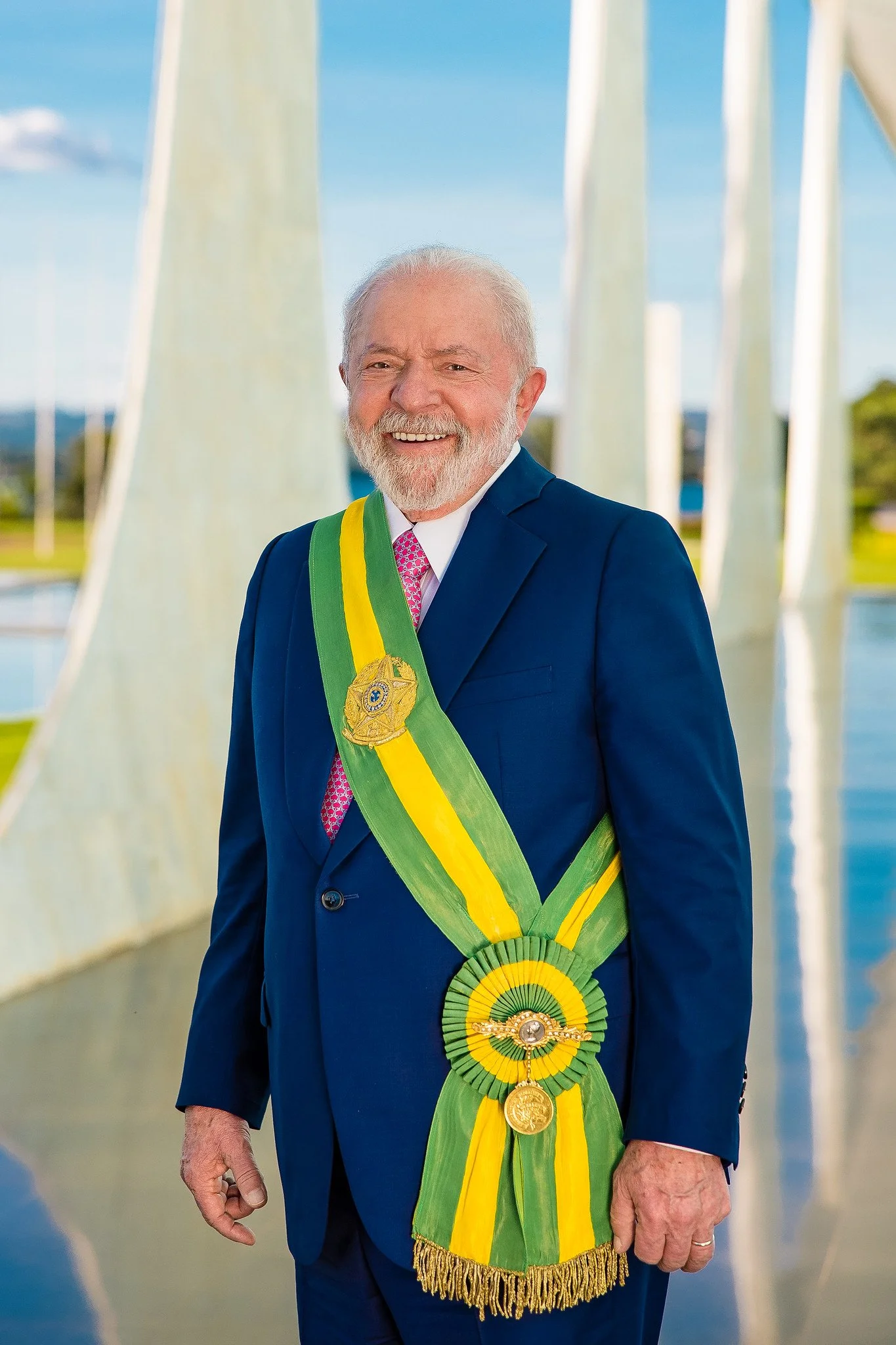
Luiz Inácio Lula da Silva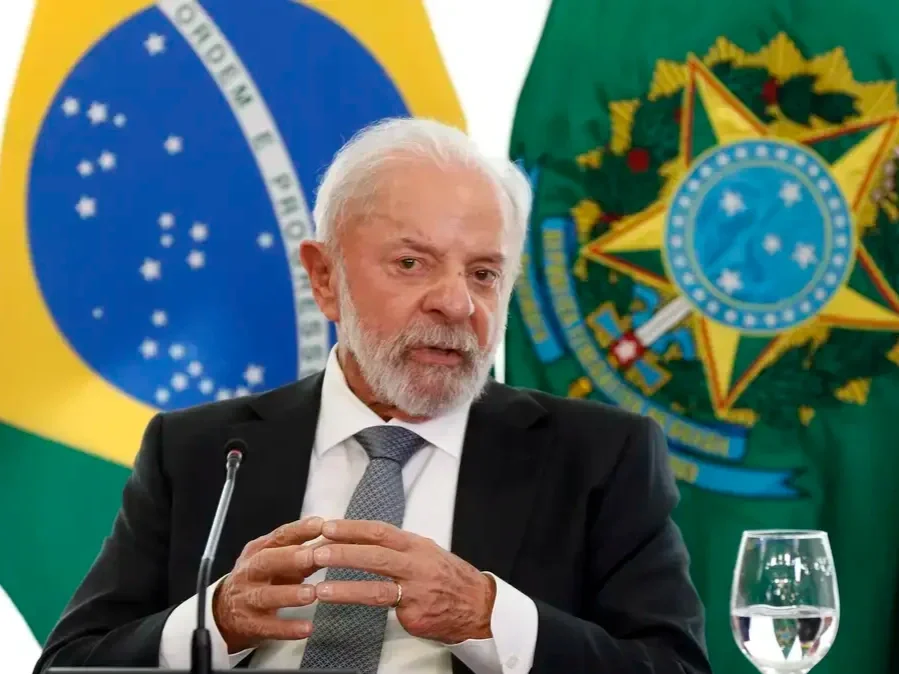
Born in poverty in the drought-stricken northeastern state of Pernambuco in 1945, Lula migrated to São Paulo as a child, lost a finger working on a factory floor, and rose through the labor ranks to lead the landmark ABC metalworkers' strikes of the late 1970s. He co-founded the Workers' Party in 1980 and lost three presidential bids before winning in 2002.
His first two terms saw tens of millions of Brazilians lifted out of poverty. His supporters credit that to the expansion of social policies under his leadership, while detractors tend to give extra credit to a commodities boom that boosted Brazilian exports and fostered growth in labor-intensive areas. When he left office at the end of 2010, Lula had over 80% approval — more than any other politician in Brazil’s democratic history.
But corruption investigations ensnared him in 2018, and he served 580 days in federal custody before the Supreme Court annulled his convictions on jurisdictional grounds. Later, the trial judge who convicted Lula was deemed biased by the Supreme Court.
He won the presidency again in 2022, defeating Jair Bolsonaro by a razor-thin margin. His ticket had campaigned on defending democracy against Bolsonaro's authoritarian impulses — fears that were validated on Jan. 8, 2023, when far-right rioters stormed the headquarters of all three branches of government. The left frames Lula's re-election bid (which would give him a fourth term) as yet another front in that same battle.
Flávio Bolsonaro
After leaving office, former President Jair Bolsonaro was barred from running again. First, electoral courts convicted him of abusing his power as president during the 2022 campaign, and then he was sent to prison for 27 years for leading a coup attempt. Even so, the Bolsonaro family remains the dominant force of Brazil’s right wing, and the former president has moved to extend that influence through his eldest son.
In December 2025, he named Senator Flávio Bolsonaro as his political heir. Flávio quickly rose in the polls and is now Lula's likeliest challenger in a runoff, further squeezing the space for moderate conservatives.
A former Rio de Janeiro state lawmaker better known for embezzlement scandals than legislation, Flávio presents himself as a “softer” brand of Bolsonarism — an oxymoron that collapses under scrutiny. He has called for full amnesty for his father and coup co-conspirators, and warned he would "use force" against any Supreme Court attempt to block him from doing so.
When speaking to markets, he echoes his father's unmet promises of deregulation and fiscal discipline. The Bolsonaro name has proven enough to sustain his comfortable polling position — and to keep his platform conveniently vague.
Romeu Zema built his political career on a simple promise: to be nothing like a politician.
A businessman with little name recognition, he rode the anti-establishment wave of 2018 onto the ballot in Minas Gerais — allying with Jair Bolsonaro to bury what both men called "old politics" — and defeated seasoned rivals to become the first state governor from Novo, a free-market party that brands itself as the antithesis of Brazil's patronage-driven political class. He was re-elected in 2022 in a first-round landslide.
In office, Zema's record has been defined as much by ideology as by turbulence. He championed privatizations and fiscal austerity, launched administrative reforms and, in his second term, accelerated infrastructure projects while cutting what his government deemed non-essential services. Behind the scenes, he worked to expand Novo's footprint in the 2024 municipal elections — with mixed results.
The controversies have been harder to manage than the agenda. Zema drew sharp criticism for his handling of Minas Gerais' chronic fiscal crisis and his alignment with Bolsonaro's pandemic response. More recently, he proposed a consortium of governors from Brazil's wealthier and conservative South and Southeast regions — a move widely interpreted as an attempt to create a conservative front, but one that failed to yield much result.
Romeu ZemaRonaldo CaiadoRonaldo Caiado, the governor of Goiás, officially launched his presidential bid late in March, becoming the Social Democratic Party's (PSD) pick for the October race. Caiado had joined the PSD earlier this year with his eye on running for president, after his previous political home, União Brasil, closed the door on his long-held ambitions. Caiado has only run for president once before in his career, winning less than 1% of the vote in 1989.
If Romeu Zema promises to break from “old politics,” Caiado is the definition of old politics — the first member of the Caiado family to govern Goiás state took office in 1883. Ronaldo gained prominence in the 1980s as the leader of a powerful landowners' union opposing land reform.
Agribusiness is Caiado base and ideological north star. When it comes to public security, he takes a hard-line stance — though he has backed amnesty for everyone involved in the Brasília riots on Jan. 8, 2023, including Jair Bolsonaro.
Set to compete for the same voters as Flávio Bolsonaro, Caiado casts himself as the seasoned alternative — experienced where Flávio is untested, steady where others perform. His main selling point is his political career spanning four decades — but that will be a reason for many voters to look elsewhere.
Renan SantosRenan Santos is one of the founders of the Free Brazil Movement (MBL), born out of the massive demonstrations of public dissatisfaction that erupted in Brazil in 2013. In late 2025, the MBL created its own right-wing political outfit, the Mission Party, and Santos will be its first presidential candidate — in what will be his first bid for elected office at any level.
His pitch is radical and deliberately unfiltered. He has promised to speak "without self-censorship" in the Northeast and criticize the Bolsa Família welfare program to its own beneficiaries' faces. In one viral video, he proposed abolishing a small Maranhão municipality he said "shouldn't exist."
Santos’s provocations have found an audience. A recent Atlas Intel/Bloomberg poll put him at 4.6% of the vote nationally — level with some sitting state governors — and at nearly 25% among voters aged 16 to 24. In terms of social media reach and engagement, he trails only Lula and Flávio Bolsonaro.
His platform combines the familiar with the jarring: calls for fiscal austerity, privatization and tough-on-crime rhetoric sit alongside proposals to merge states and municipalities, strip mayors of political rights for missing performance targets, and turn the Northeast into a special economic zone he dubs a "Saudi Arabia" for data centers.
What sets him apart on the right is less the agenda than the attitude — and his refusal to play a supporting role to the Bolsonaro family. He has compared Flávio Bolsonaro to Judas, a traitor selling out "the cause" for silver coins, and reserved some of his sharpest attacks for the senator rather than for Lula. "The PT is the devil, our natural enemy," he told newspaper Estadão. "Flávio is the betrayer within."
Analysts note that the anti-system lane Santos is targeting was largely claimed by Bolsonarism in 2018 and has never fully reopened. His support, for now, is wide online and shallow everywhere else.
Key dates to look out for
2026Apr. 4: Deadline for registering political parties and federations, in which two or more parties operate as a single unit for at least four years. The largest federation of 2026 is already set: a right-wing alliance between the PP and União Brasil. Candidates must also formally join their political parties by this point.
Prospective candidates must also change their voting residence to reflect where they will run come October, and anyone in an executive office must step down if they plan to seek a different post. The Lula administration is expected to lose roughly 20 of its cabinet ministers to the campaign.
Jul. 20-Aug. 5: Party convention season, during which candidates are formally selected.
Aug. 15: Deadline to register candidacies.
Aug. 16: Official campaign advertising begins on streets and online.
Aug. 28: Free airtime on radio and television begins, with time allocated proportionally a party’s lower-house representation.
Oct. 4: First round of the election. Results are typically released hours later.
Oct. 25: Runoff election for president and governors who failed to win an outright majority. Results are released the same day.
Dec. 19: Certification of elected candidates by the electoral justice system.
2027Jan. 5: President takes office.
Jan. 6: Governors take office.
Feb. 1: Lawmakers take office for the new four-year legislature.
The polls
Polls do more than measure public opinion, they shape the electoral field itself. Parties, donors and candidates calibrate their behavior around polling numbers, which drives many campaigns to commission favorable surveys in hopes of manufacturing momentum. This observatory will therefore rely on four pollsters with proven track records: Datafolha, Ipec-Ipsos, Quaest and AtlasIntel.
Government approval ratings — a key variable in electoral calculations — will be tracked throughout, alongside voting intentions as the candidate field takes shape.
Lula’s approval ratings





MONITORING OF THE ELECTIONSBrazilian Political Parties
-

-

-

-

-

-

-

-

-

-

-

-

-

-

-

-

-

-

-

Solidarity
-

-

-

-

-

-
-

-

-

-

-

-

-

-

archives / 2022Weekly 2022 Brazilian Election Bulletin
Brazilian Electoral Bulletin - Nº49 Jan 13 2023
Brazilian Electoral Bulletin - Nº48 Jan 06 2023
Brazilian Electoral Bulletin - Nº47 Dec 30 2022
Brazilian Electoral Bulletin - Nº46 Dec 23 2022
Brazilian Electoral Bulletin - Nº45 Dec 16 2022
Brazilian Electoral Bulletin - Nº44 Dec 09 2022
Brazilian Electoral Bulletin - Nº43 Dec 02 2022
Brazilian Electoral Bulletin - Nº42 Nov 25 2022
Brazilian Electoral Bulletin - Nº41 Nov 18 2022
Brazilian Electoral Bulletin - Nº40 Nov 11 2022
Brazilian Electoral Bulletin - Nº39 Nov 04 2022
Brazilian Electoral Bulletin - Nº38- Oct 28 2022
Brazilian Electoral Bulletin - Nº37- Oct 21 2022
Brazilian Electoral Bulletin - Nº36- Oct 14 2022
Brazilian Electoral Bulletin - Nº35- Oct 07 2022
Brazilian Electoral Bulletin - Nº34- Set 30 2022
Brazilian Electoral Bulletin - Nº33- Set 23 2022
Brazilian Electoral Bulletin - Nº32- Set 16 2022
Brazilian Electoral Bulletin - Nº31- Set 09 2022
Brazilian Electoral Bulletin - Nº30- Set 02 2022
Brazilian Electoral Bulletin - Nº29- Aug 26 2022
Brazilian Electoral Bulletin - Nº28- Aug 19 2022
Brazilian Electoral Bulletin - Nº27- Aug 12 2022
Brazilian Electoral Bulletin - Nº26- Aug 05 2022
Brazilian Electoral Bulletin - Nº25- Jul 29 2022
Brazilian Electoral Bulletin - Nº24- Jul 22 2022
Brazilian Electoral Bulletin - Nº23- Jul 15 2022
Brazilian Electoral Bulletin - Nº22 - Jul 08, 2022
Brazilian Electoral Bulletin - Nº21 - Jul 01, 2022
Brazilian Electoral Bulletin - Nº20 - Jun 23, 2022
Brazilian Electoral Bulletin - Nº19 - Jun 17, 2022
Brazilian Electoral Bulletin - Nº18 - Jun 10, 2022
Brazilian Electoral Bulletin - Nº17 - Jun 03, 2022
Brazilian Electoral Bulletin - Nº16 - May 20, 2022
Brazilian Electoral Bulletin - Nº15 - May 20, 2022
Brazilian Electoral Bulletin - Nº14 - May 13, 2022
Brazilian Electoral Bulletin - Nº13 - May 06, 2022
Brazilian Electoral Bulletin - Nº12 - Apr 30, 2022
Brazilian Electoral Bulletin - Nº11 - Apr 22, 2022
Brazilian Electoral Bulletin - Nº10 - Apr 15, 2022
Brazilian Electoral Bulletin - Nº9 - Apr 8, 2022
Brazilian Electoral Bulletin - Nº8 - Apr 1, 2022
Brazilian Electoral Bulletin - Nº7 - Mar 25, 2022
Brazilian Electoral Bulletin - Nº6 - Mar 18, 2022
Brazilian Electoral Bulletin - Nº5 - Mar 11, 2022
Brazilian Electoral Bulletin - Nº4 - Feb 25, 2022
Brazilian Electoral Bulletin - Nº3 - Feb 18, 2022
Brazilian Electoral Bulletin - Nº2 - Feb 11, 2022
Brazilian Electoral Bulletin - Nº1 - Feb 4, 2022
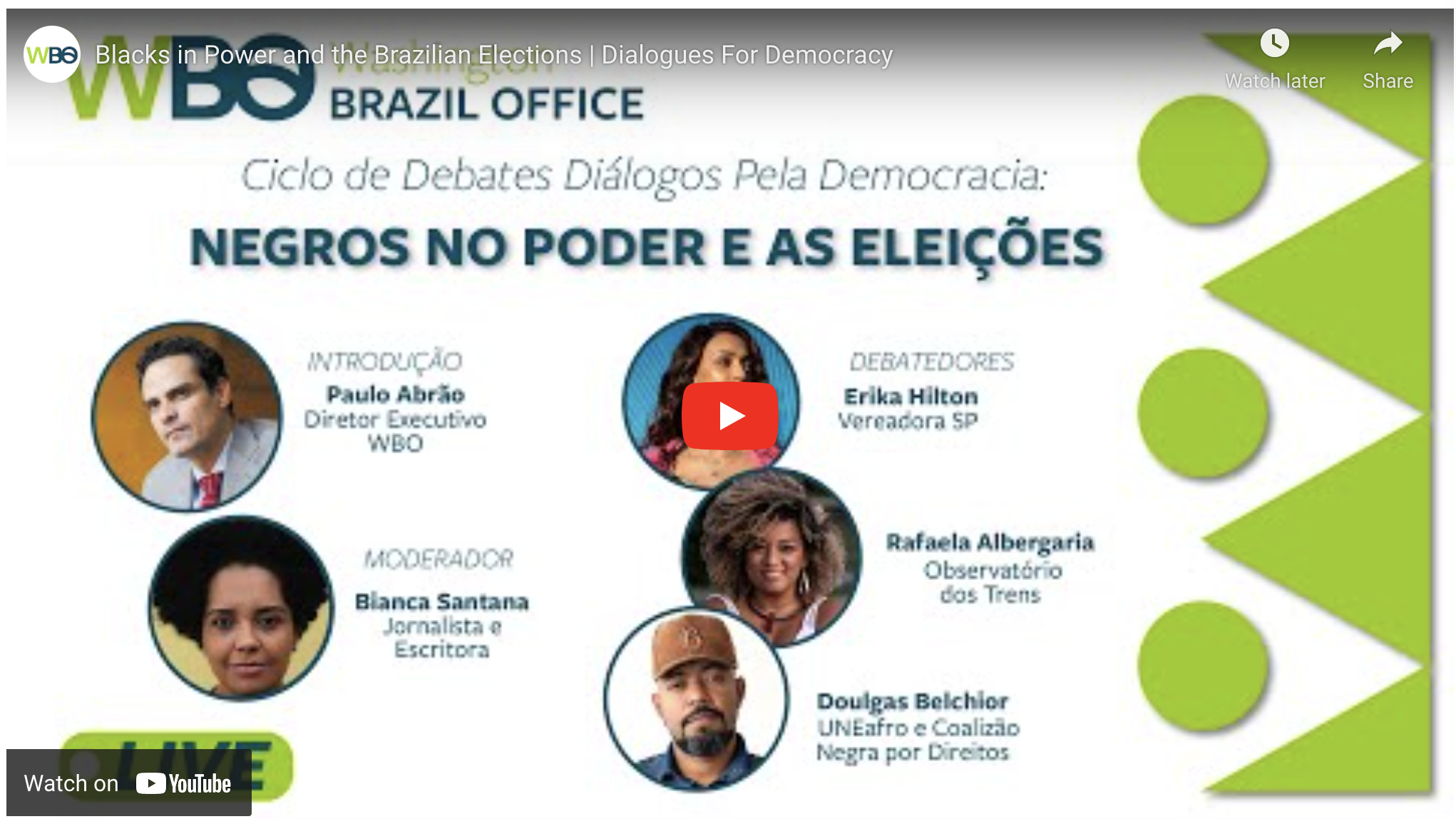
Debates "Dialogues for Democracy"




Podcast Brazil Unfiltered


